The year was 2016.
India’s metal scrap ecosystem largely operated outside the organised sector, and circularity, at least in the context of metals, was still more a textbook concept than an industrial reality.
Scrap existed, recycling happened, and volumes moved every day. But the ecosystem itself remained informal, fragmented, and largely invisible to institutional markets. It was seen as a secondary activity; necessary, but not strategic.
A decade later, that framing no longer holds. That single fact explains why this decade matters. Why what we build in 2026 matters.
India today stands at a very different economic moment. With sustained growth, expanding infrastructure, and rising manufacturing ambitions, the country’s demand for metals is accelerating rapidly. By 2036, India’s steel requirement is expected to cross 300 million tonnes annually.
At that scale, recycling cannot remain peripheral. Scrap is no longer a by-product of industry; it is becoming one of its foundations. Globally, this shift is already visible. Developed economies are increasingly retaining scrap domestically to strengthen their own circular manufacturing systems. The assumption that scrap imports will always remain abundant is steadily weakening.
For India, the implication is clear: domestic recycling must be organised, efficient, and trusted at scale.
India has never lacked recyclers, traders, or processors. The strength of the scrap ecosystem has always been its entrepreneurial energy and adaptability. But over 90% of recycling activity still operates informally, without standardised price discovery, consistent data, or institutional visibility.
This informality worked when volumes were smaller and expectations lower. It becomes a constraint when industries seek:
Circularity, in such a context, cannot remain aspirational. It must become measurable.
Without traceability, transparency, and data, recycling cannot integrate meaningfully into India’s industrial, financial, or sustainability frameworks.
Circularity is often discussed in moral or environmental terms. In practice, it is a market design problem. Unless we can quantify recycled material, measure avoided emissions, and track transactions across the value chain, recycling will remain outside the mainstream of industrial decision-making.
Circular economies do not emerge from intent alone. They emerge when markets are structured to support them. This requires platforms that can bring credibility, standardisation, and trust into ecosystems that have historically functioned on relationships rather than systems.
Earlier work in commodity markets offered an important insight. When BSE-E-Agricultural Markets (BEAM) was created in collaboration with the Bombay Stock Exchange, the objective was not to disrupt agriculture, but to bring transparency and structure to activities long considered secondary.
What became evident was that each market, whether agriculture or metals, has its own complexities. But the underlying requirement remains the same: credible market infrastructure that allows participants to operate with confidence. That philosophy carries directly into scrap metals.
MetalX was not envisioned as a platform chasing scale for its own sake. It was designed as enabling infrastructure for an ecosystem ready to evolve.
The intent is straightforward:
Not to replace existing networks, but to strengthen them. Not to impose formality, but to enable reliability.
By bringing technology, transparency, and market discipline together, MetalX seeks to help reposition recycling, from an activity that happens in the background to one that stands at the centre of industrial strategy.
As recycling moves into the mainstream, its capital requirements will grow. Equipment, logistics, compliance, and scale all demand investment. Investment, in turn, demands data. Formalisation is often misunderstood as control. In reality, it is about confidence: for participants, institutions, and policymakers alike.
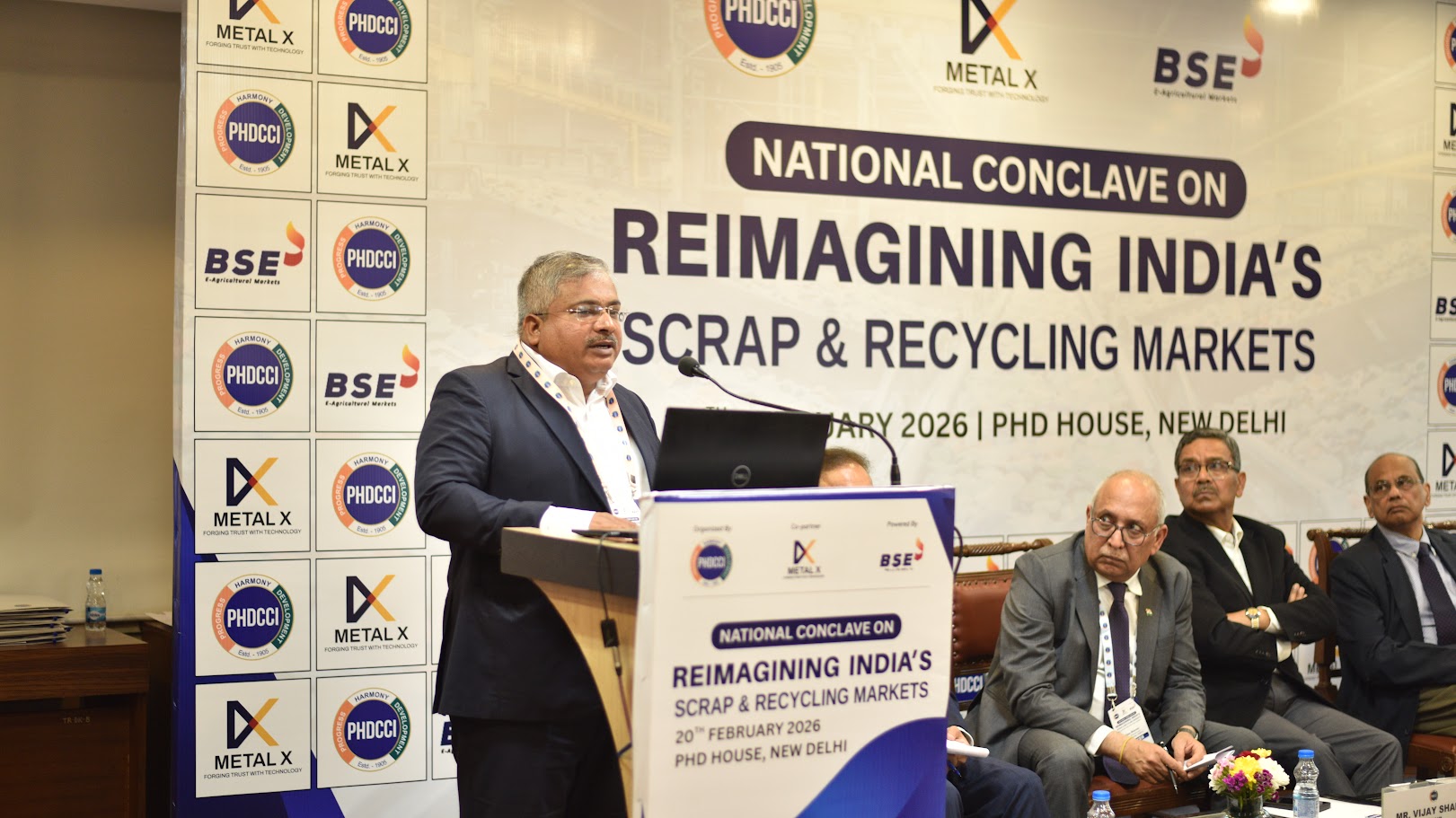
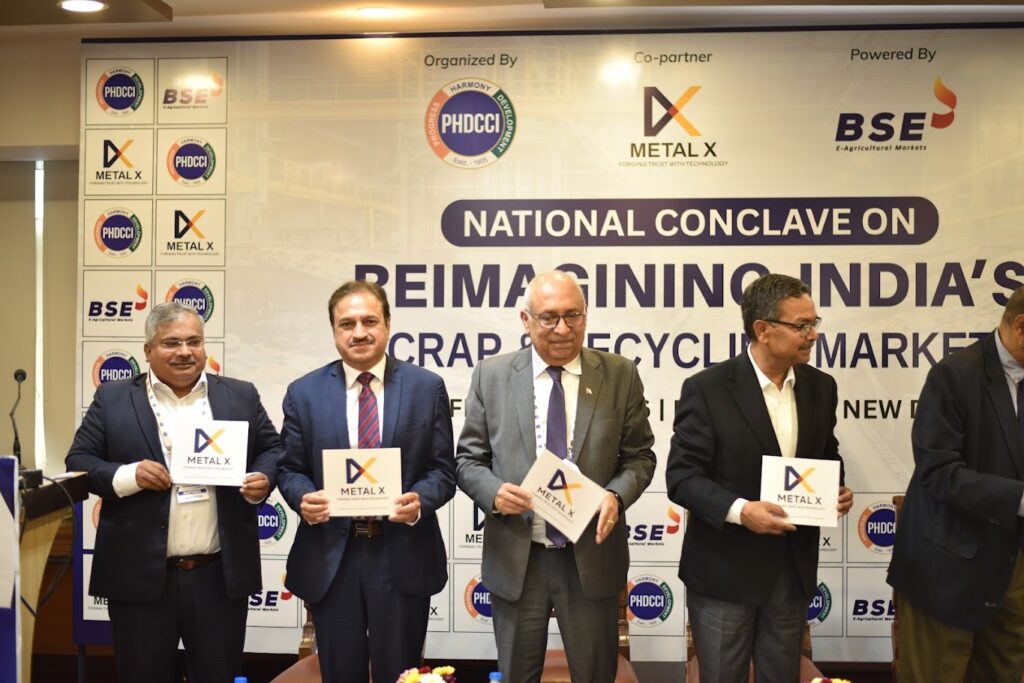
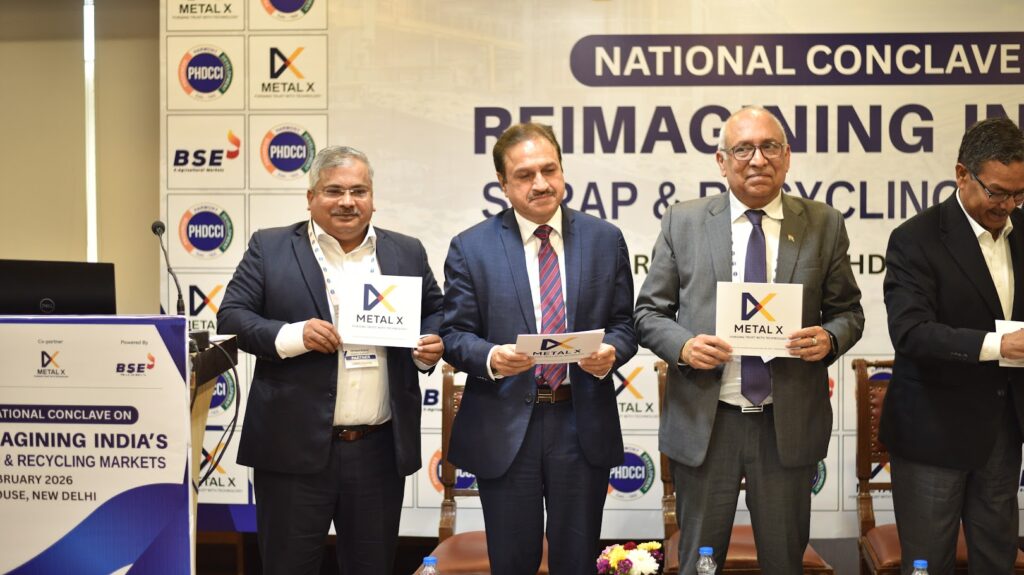
Without credible data, recycling cannot fully integrate with ESG frameworks, carbon accounting, or long-term financing. With it, circularity becomes not just visible, but viable. This was a central theme of the recent industry dialogue at PHDCCI: that ‘recycling must be repositioned not as a side industry, but as core economic infrastructure.’
The coming decade will define whether India’s recycling ecosystem matures or merely expands. Growth without structure introduces fragility. Scale without systems creates risk.
If India is to meet its industrial demand sustainably, recycling must be designed to operate with the same seriousness as primary manufacturing: measured, trusted, and integrated. The work of building such markets is quiet. It rarely draws attention. But it shapes outcomes for decades.
MetalX represents one step in that long journey towards a ‘recycling ecosystem that is circular by design, credible by data, and central to India’s industrial future.’